
Pressure Testing vs Other Types of Leak Detection: What’s the Difference?
- Aug 3
- 2 min read
When a pipework system is losing pressure or there are signs of water damage, it is not always obvious which solution is needed. Pressure testing and leak detections are closely related, but they perform different roles.
At Leak Detection Solution, we use a range of methods to investigate plumbing problems and locate hidden leaks with as little disruption as possible. If you’re searching for leak detection services in Reading, understanding the difference can make it easier to know what to expect from an inspection.

What Is Isolation Pressure Testing?
Isolation pressure testing checks whether a plumbing or heating system can maintain a set level of pressure. We isolate sections of the system and monitor them to identify whether pressure is dropping.
A loss in pressure usually indicates that water is escaping somewhere within the pipework. However, pressure testing does not always reveal the exact location of the leak. Its main purpose is to confirm that a leak exists and help us narrow down the affected section.
This method is particularly useful for central heating systems, underfloor heating, hot and cold water pipes, and complex plumbing networks. Isolation and pressure testing can also prevent unnecessary investigation in areas that are functioning correctly.
What are Leak Detections?
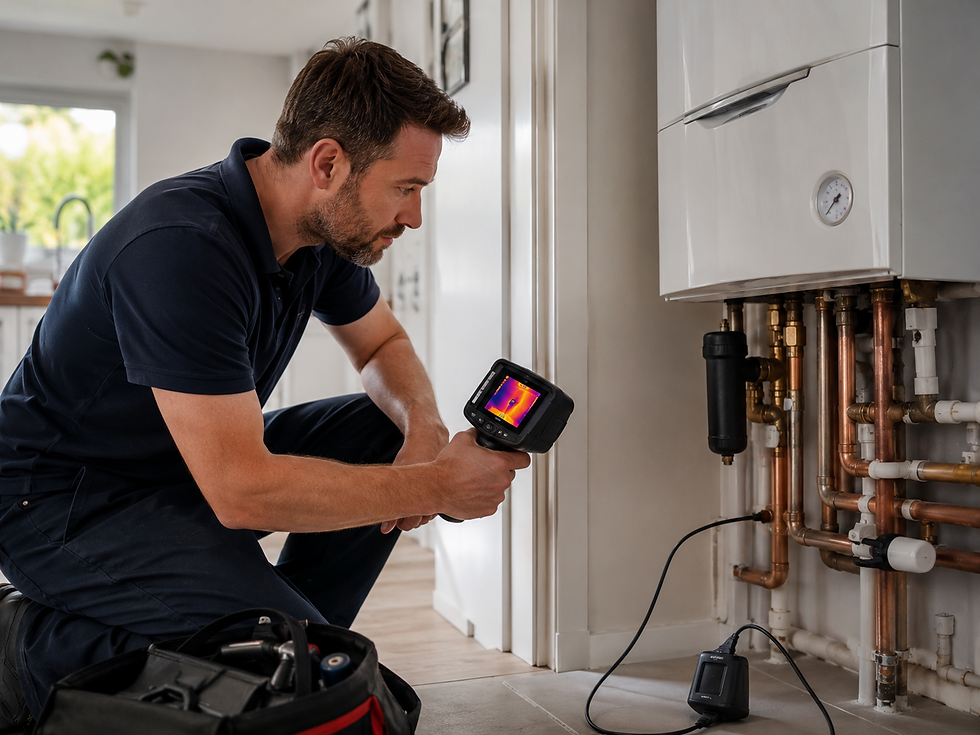
Leak detections involve the wider process of finding the precise source of a suspected leak. Once pressure testing confirms a problem, we may use specialist techniques such as acoustic profiling, tracer gas surveys and moisture mapping.
Our water leak detection Reading services are designed to locate hidden issues beneath floors, behind walls, inside heating systems or within underground pipes. Depending on the circumstances, we may use one method or combine several techniques to produce a reliable result.
Non-invasive leak detection helps reduce the need to lift large sections of flooring, remove tiles or open walls simply to search for the problem.
How Do the Services Work Together?
Pressure testing and other methods to detect leaks are often most effective when used together. Pressure testing confirms which part of the system is losing pressure, while specialist leak detection equipment helps identify the leak’s exact position.
For example, if a central heating system continually loses pressure, we may first isolate and test individual sections. Once the affected pipework has been identified, tracer gas or acoustic leak detection can help pinpoint the damaged area.
This structured approach saves time and limits unnecessary damage to the property.
Which Service Do You Need?
You may need pressure testing if your boiler pressure keeps falling, your heating system requires regular topping up or there is no visible sign of a leak. A full leak investigation may be more suitable if you have damp patches, unexplained water damage, a rising water bill or moisture beneath flooring.
At Leak Detection Solution, we assess each situation before selecting the most appropriate methods of testing. Our leak detection specialists in Reading use professional equipment to locate plumbing leaks accurately and provide clear findings.
For dependable leak detections in Reading, pressure testing is often the starting point, while a detailed leak detection process provides the answers needed to plan the correct repairs.


Comments